Upon completing the piece, 08.01.2026
This piece was born of a deep loneliness and the existential need to
connect.
I struggled to make sense of the world around me – society and the music
scene – and the seeming indifference of those in my vicinity to the horror and
tragedy of man-made human suffering in the world.
In this time, in light of the violence and injustice in the world, I
found it difficult to believe in beauty and its ability to touch and move us.
How does one reconcile man-made beauty (in the concert hall or in museums) with
man-made death and destruction? When we concurrently watch mothers carry the blown-up
remains of their children in shopping bags, when we watch young children
hugging the corpses of their fathers, begging them to come back to life?
- - - - - - - - -
How does a sound come into being, and how does it cease to exist? And
how is it, in its lifetime? How does it breathe and move, what does it
want?
My piece is about being together with one another
About being free
About self-determination
About being strong, being unrelentingly oneself
(“Strength is not measured by how many people you can blow up or how
many children you can leave hungry.” - Tony Burke, Minister for Home
Affairs, Australia)
I cannot believe in a beauty which controls, which demands, which
excludes, which oppresses, which dictates.
John Cage would say about playing a piece or sound this way or that way –
both ways are beautiful. Things are beautiful, for they are themselves. That is
the beauty of self-determination!
And beautiful is also hope, natality; new life – existence – resistance
Human beings are born good “人之初,性本善,性相近,习相远” (All
men are born intrinsically with a good and similar nature. However, their
natures will change due to what they learn.)
And human beings are born free.
There are glimpses of heaven in everyday life.
There is kindness, there is togetherness, which is really all that we
have in our short lives.
“Now, more than ever, I
understand what struggle is about. Today we are together, sharing with each
other, laughing and crying together; tomorrow, one of us is just taken away
from the rest of us forever. Yet we go on, we continue, that is the only way we
can honour those who have so generously laid down their lives.”
- Ang Swee Chai, From Beirut to Jerusalem
- - - - - - - -
Humans did not create instruments for music. They created instruments
for communication.
Have we forgotten this, as we modernised our instruments and made them
louder, faster and cleaner? Tones have been reduced to just a blip in a phrase,
a cog in a large machine.
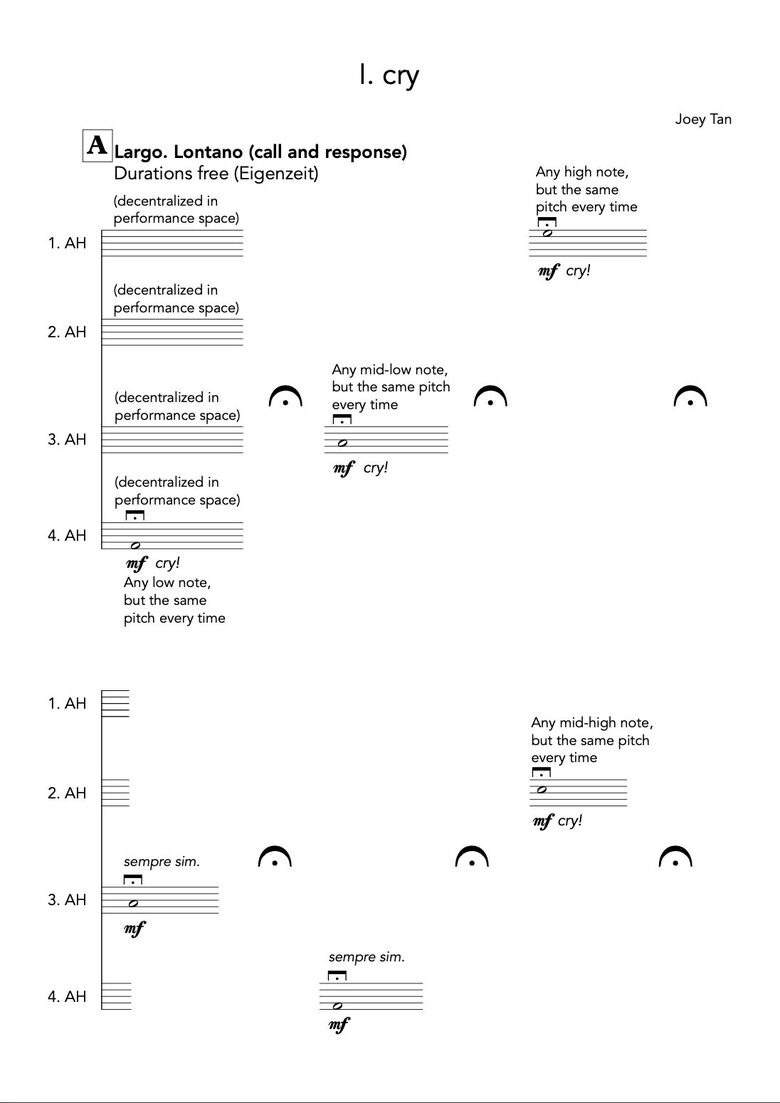
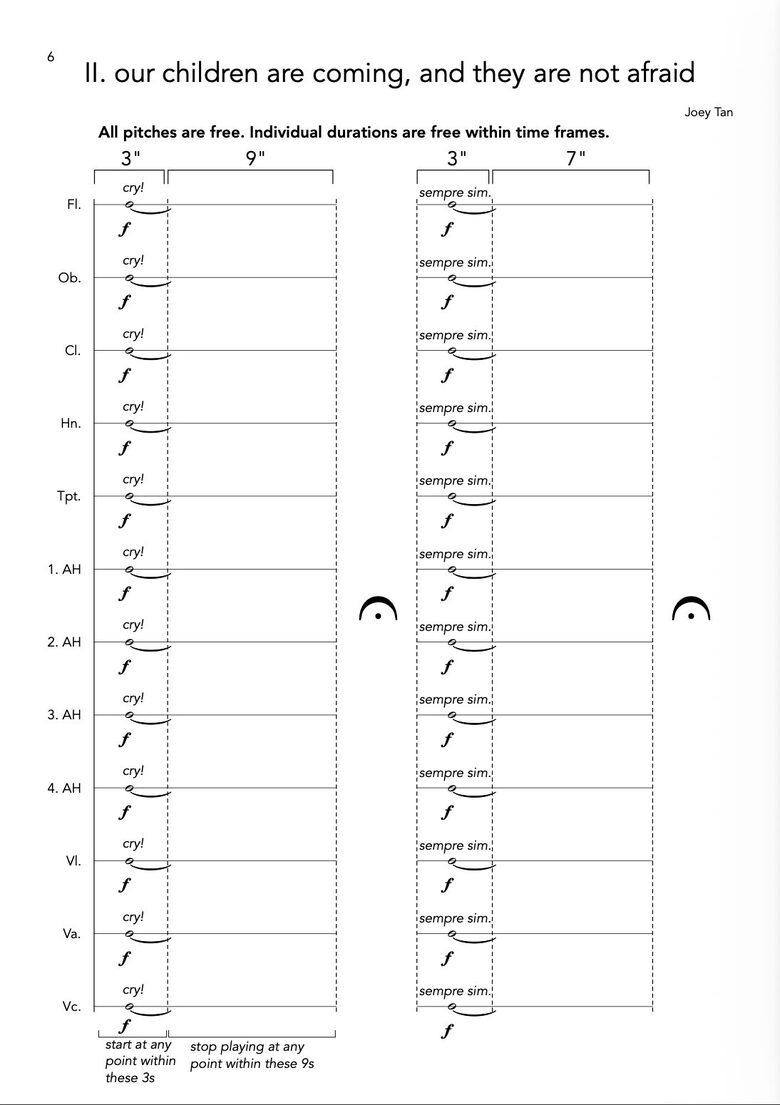
These cries in my piece are a bid for connection, not just over space,
but also over time: our shared humanity.
How do we make music, when only single tones are available to us? Without
melodies, without phrases, without rhythms, without harmonies?
- - - - - - - -
My task is to live, to feel; to bear witness (Zeitzeuge), to keep a
record of what I see and hear and feel and think and experience, and then to
show it honestly and sincerely.
“So the paintings aren’t pictures, but evidences - maybe documents,
along the road you have not chosen, but are on nevertheless.” - Philip Guston
"I have not painted the war,
because I am not the kind of painter who goes out like a photographer looking
for something to depict. But I have no doubt that the war is in these paintings
I have done.” – Picasso